
Ebbtide beginner guide: Operations, Bases, and Evacuation
Learn Ebbtide's announced map, base supply, combat, and evacuation systems, with practical priorities for understanding the upcoming strategy game.
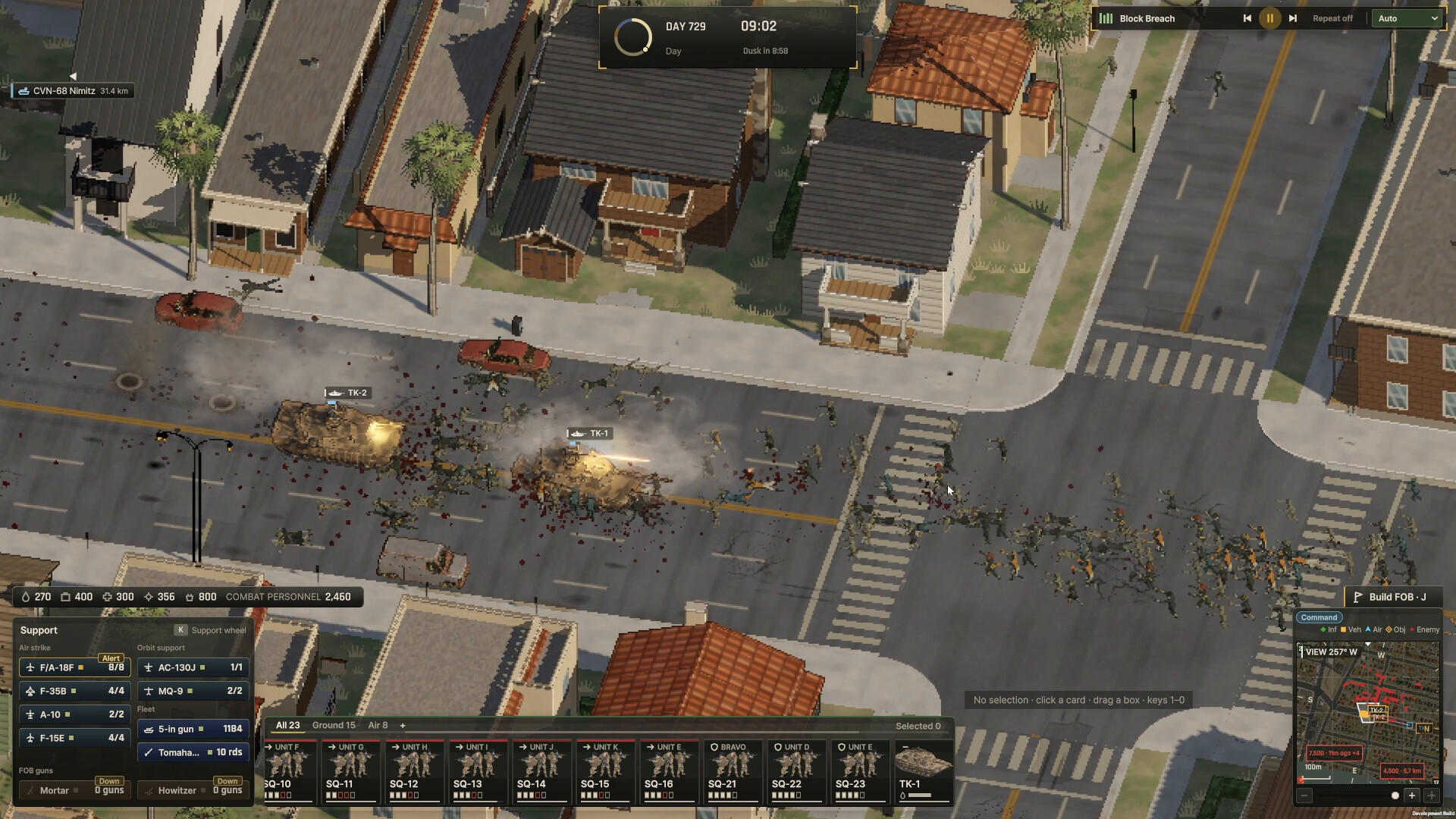
Ebbtide beginner guide: What to learn first
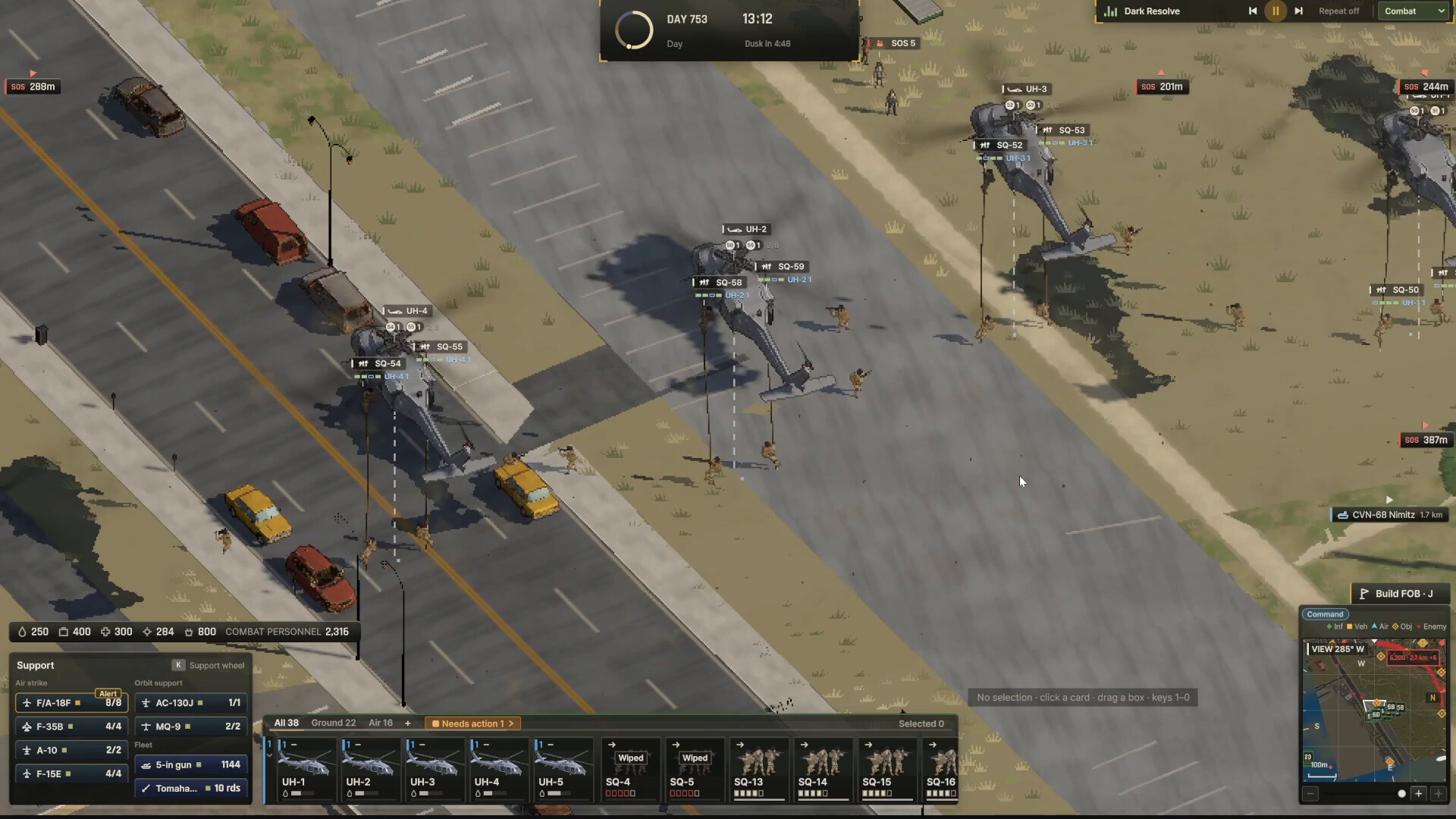
Start with three priorities: understand the operations map, connect forward bases to ammunition and fuel deliveries, and plan evacuations before forces become isolated. These are central to Ebbtide’s announced campaign: battles have lasting consequences, units depend on supplied bases, and what you rescue from Los Angeles becomes your force for the wider world campaign.
As of October 23, 2026, Ebbtide’s official Steam page lists the game as Coming soon, with no exact release date. This guide explains ProjectAlive’s announced systems and the planning decisions they suggest. It is an orientation for the upcoming single-player zombie survival strategy game.
You command TF-1 “Ark,” humanity’s last carrier task force. The opening campaign spans Los Angeles, from the Hollywood Hills to the Port of LA.
Understand the map before focusing on one battle
The announced operations map connects directly to street-level combat. Scrolling into a street brings you into its live battlefield without a loading screen; scrolling back out leaves that battle running. Casualties and destroyed buildings carry through to the map.
That makes zooming out different from pausing. Use the operations map’s pause function when you need time to assess the situation. The map also supports speeds up to 4x, so pay attention to the pace while learning how several threats develop at once.
Los Angeles has 15 districts that move through Hold, Crisis, and Lost states. Your responsibilities include ordering National Guard, LAPD, and LA County Sheriff’s units to hold, delay, or withdraw, alongside calling in Marines from Camp Pendleton.
A useful planning sequence for these systems is:
- Review district conditions and visible hordes.
- Identify troops and survivors at risk of being cut off.
- Decide which positions need to hold and which forces should withdraw.
- Plan truck or helicopter movements for troops, supplies, and refugees.
Only hordes within your forces’ line of sight appear on the map. Treat an area without visible enemies as an area that still needs assessment.
Plan a base around its supply connection
Forward operating bases are intended to support both defense and replenishment. Soldiers, vehicles, and aircraft consume ammunition and fuel, and the announced rules allow them to rearm and refuel only at bases you hold.
The base toolkit includes the following structures:
| Base elements | Announced role |
|---|---|
| HESCO and concrete walls, gates, and scaffolding | Establish and defend a perimeter |
| Gun nests, CIWS, and mortar pits | Provide defensive firepower |
| Ammo depot and fuel point | Support ammunition and fuel needs |
| Lighting | Add lighting to the base |
Construction also depends on transport. Wall materials must arrive by hooklift truck or helicopter sling, while the horde can attack convoys and cut roads.
Before choosing where to dig in, consider how supplies will reach the position and how your forces will return for replenishment. A perimeter, its delivery route, and the units depending on it need to work together. This follows from the supply rules described on the official Steam listing; it is not a tested build order.
Account for the horde’s climbing and conversion threats
Several announced zombie behaviors change how you should evaluate a defensive position:
- Walls and rooftops can be reached. Zombies pile up to climb them, so height alone does not guarantee safety.
- Low-hovering helicopters face contact threats. Zombies can cling to aircraft hovering close to the ground.
- Fallen soldiers can reinforce the horde. Soldiers killed by zombies rise again as zombies.
These mechanics make withdrawal routes and extraction conditions important parts of a defense. When considering a rooftop position or helicopter pickup, assess how the force will leave if zombies reach it.
ProjectAlive also announces both force command and direct unit control. Keep the wider situation in mind when following an individual fight: other battles continue unless you pause.
Use heavy weapons with their limits in mind
Announced support includes M777 howitzers, HIMARS rockets, destroyer guns, Tomahawk cruise missiles, several aircraft strike options, and AC-130J and MQ-9 orbits.
Two limits deserve attention: ship magazines are finite, and heavy weapons can bring buildings down. Before committing support, consider what the target area contains and what ammunition you will need for later operations. Destruction persists within the connected battlefield and operations map.
The available information supports learning these tradeoffs; it does not establish an optimal weapon ranking or a universal opening army.
Treat evacuation as preparation for the next campaign
The people, troops, equipment, and supplies brought to the Port of LA are intended to become your starting force aboard the Ark for the world campaign. Evacuation therefore affects what you can carry forward.
The announced world campaign includes choosing regions to assist, positioning carrier-group weapons within range, resupplying at friendly ports, and adding allied warships. Rescuing pilots and specialists matters because ProjectAlive describes them as personnel you cannot train.
For a beginner, the useful habit is to evaluate a position alongside its exit plan: what is worth protecting there, how long can it remain supplied, and how will its people and equipment reach safety? Those questions connect Ebbtide’s map, combat, logistics, and campaign progression.